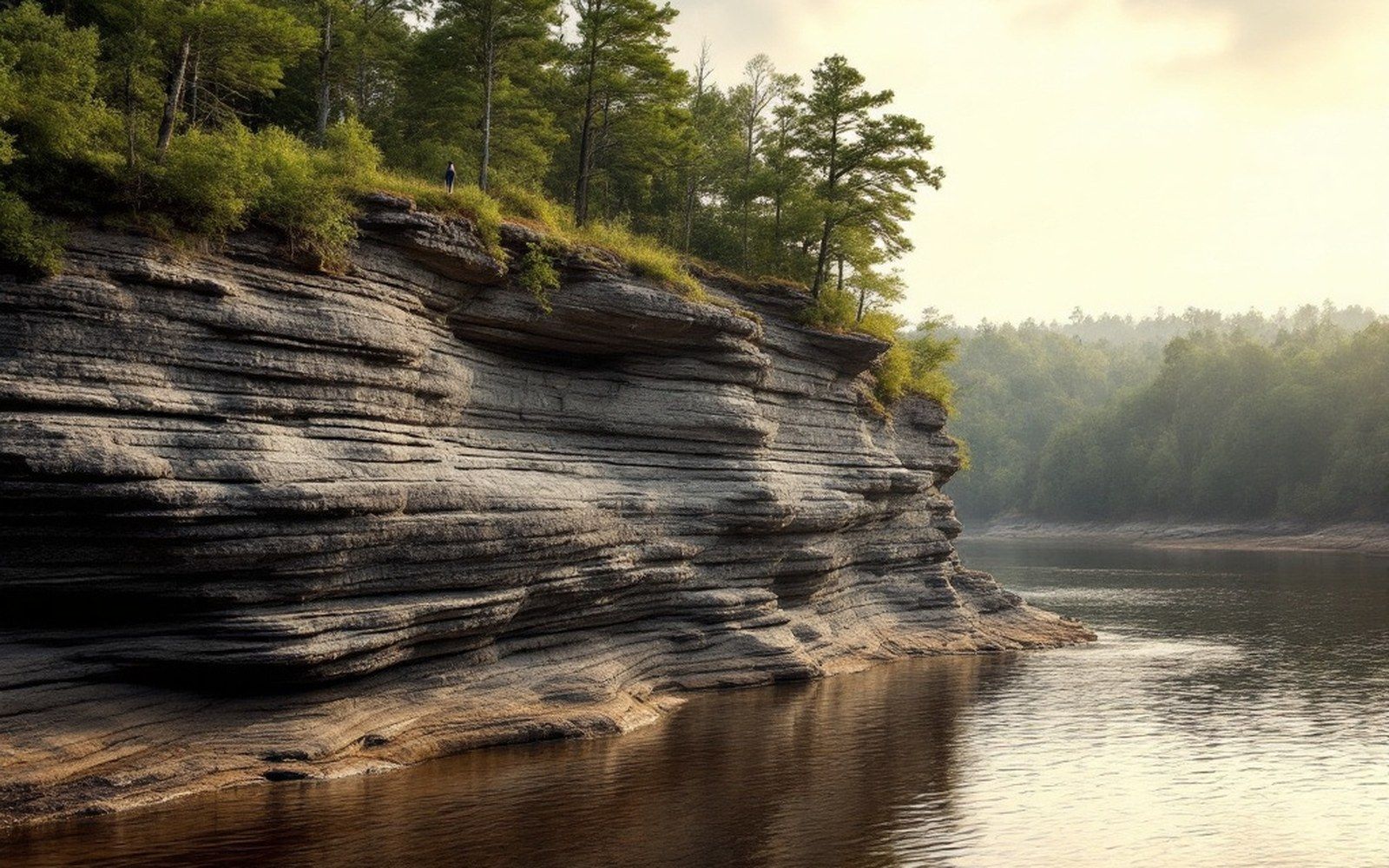
A crystalline outcrop overhangs the river it has been shedding into for longer than the mountains have had their present shape.
Raven Rock itself is a mass of crystalline rock — predominantly quartzite and felsic gneiss — that drops a clean hundred and fifty feet to the Cape Fear River below. The outcrop sits in Raven Rock State Park in Harnett County, at the edge of the Piedmont, which is not where you'd expect to find a cliff face. The Piedmont here is old and worn low; most of what you see from a car window is gently rolling red-clay farmland and second-growth pine. The rock survives because it is simply harder than the country around it. Geologists classify it as a monadnock — the resistant core of a once-larger formation, left standing after softer material eroded away across millions of years.
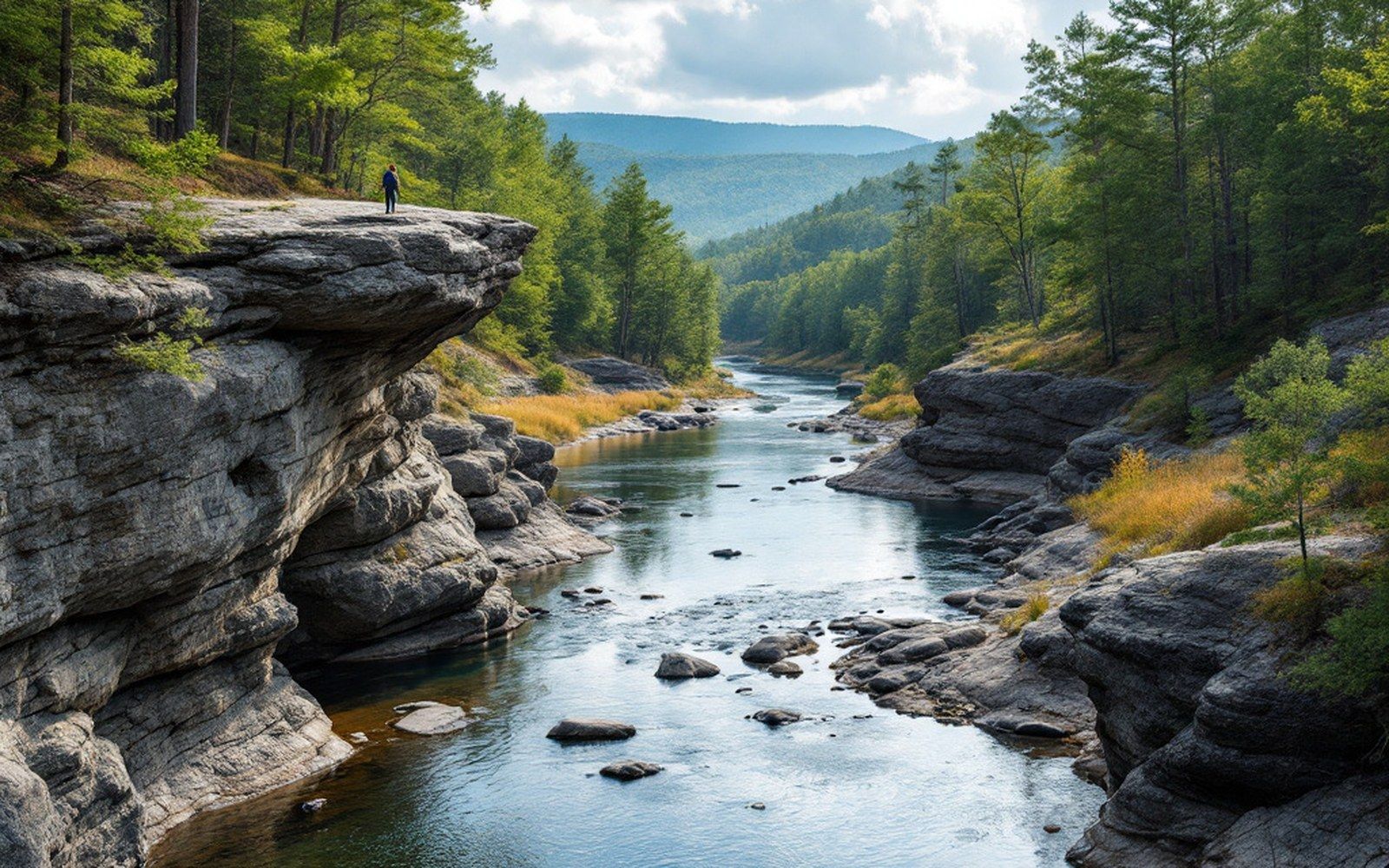
The formation is part of the Carolina terrane, a suspect terrane — a block of crust with a distinct geological history from the North American plate it eventually docked against — assembled during the late Proterozoic and Cambrian, roughly 540 to 600 million years ago. The rocks here did not form where you find them. They came in from elsewhere, accreted during the slow collisions that would eventually build the Appalachians, and then spent the next several hundred million years being exhumed as the landscape above them wore down.
The Cape Fear River cuts along the base of the outcrop, and the relationship between rock and water here is older than it looks. The Cape Fear is one of the few major rivers in North Carolina that runs entirely within the state — from its headwaters near Greensboro to its mouth at the coast south of Wilmington. That internal drainage means its history is legible in its own geology. Where it meets the crystalline rock at Raven Rock, the river is doing what rivers always do: finding the softest path, undercutting where it can, leaving behind what resists.
The undercutting is real and ongoing. The overhang that gives the cliff its dramatic profile is not a static feature; it is a record of differential erosion playing out in slow motion. Water moves into fractures during wet seasons, expands during freeze-thaw cycles, and carries sediment that abrades the base faster than the cap weathers from above. Eventually — on geologic time, not human time — sections release. The talus at the base of the outcrop is the accumulated evidence of those releases: angular blocks of gneiss and quartzite that arrived suddenly, then sat.
Below the cliff face, the river floodplain holds a different kind of record. Bottomland hardwood forest fills the low ground — river birch, sycamore, ironwood, pawpaw — species that tolerate seasonal inundation and whose roots are partly what holds the bank together on the softer stretches. The contrast between the floodplain's hardwood-and-sediment character and the hard crystalline mass looming above it is essentially a cross-section of the Piedmont's geology made legible without any excavation.
The rock at Raven Rock has been dated as part of broader regional surveys of the Carolina slate belt, a zone of metavolcanic and metasedimentary rocks that runs as a northeast-trending band across the central Piedmont. The belt's formation is linked to ancient island-arc volcanism — the same kind of tectonic setting that produces the modern Japanese archipelago — and the evidence for that interpretation lives in the rock's chemistry and structure, still readable in thin section under a polarizing microscope.
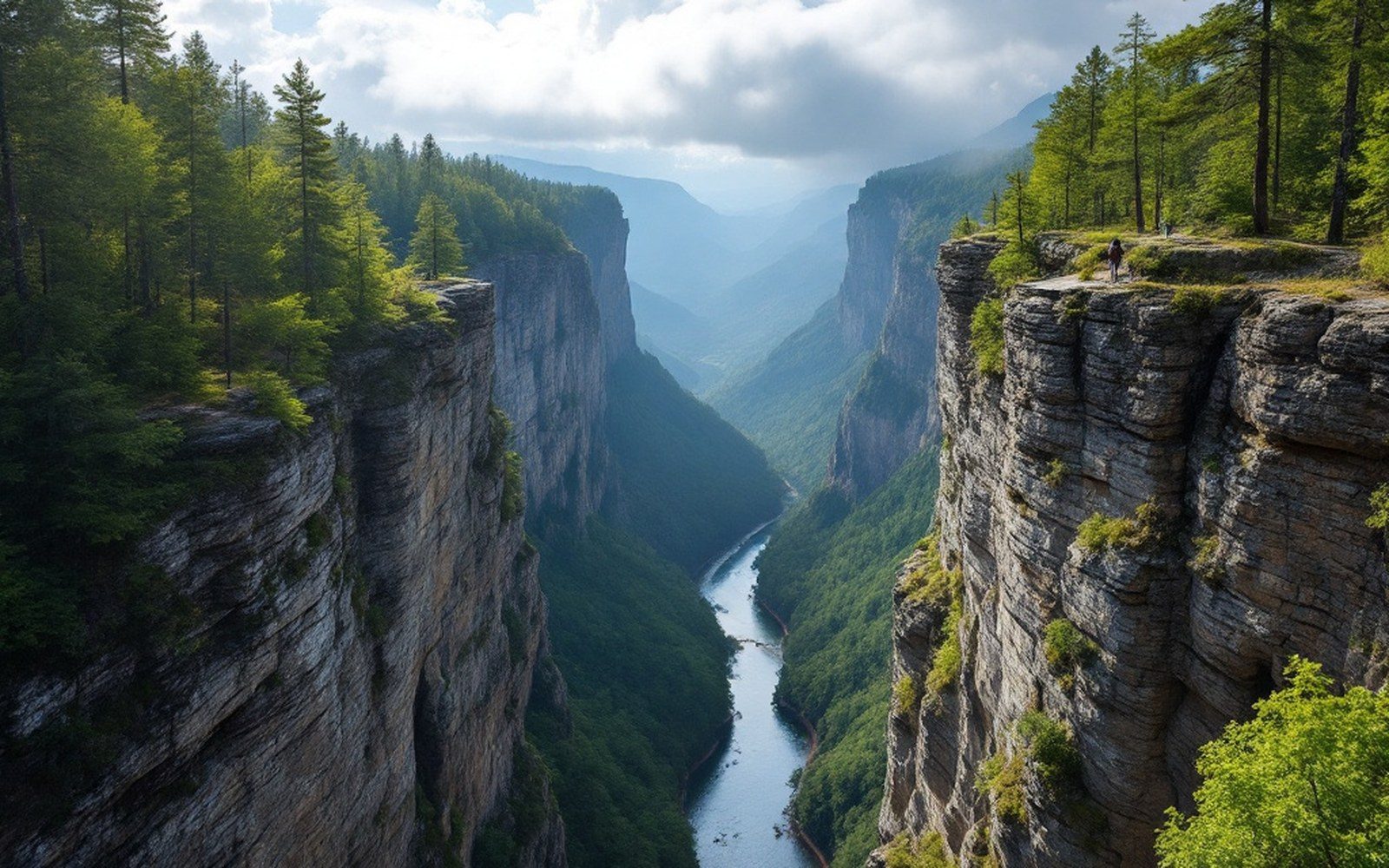
What the cliff face shows you, standing below it, is compression and time. The foliation — the layered, planar texture in the gneiss — records metamorphism under heat and pressure that has not existed anywhere near here in hundreds of millions of years. The North Carolina Geological Survey has mapped these units as part of ongoing Piedmont characterization, and the published maps make the terrane boundaries visible for anyone who wants to trace the rock type across the county line. The cliff above the Cape Fear is not a curiosity. It is a structural remnant of a world that finished assembling itself before the first fish grew legs.