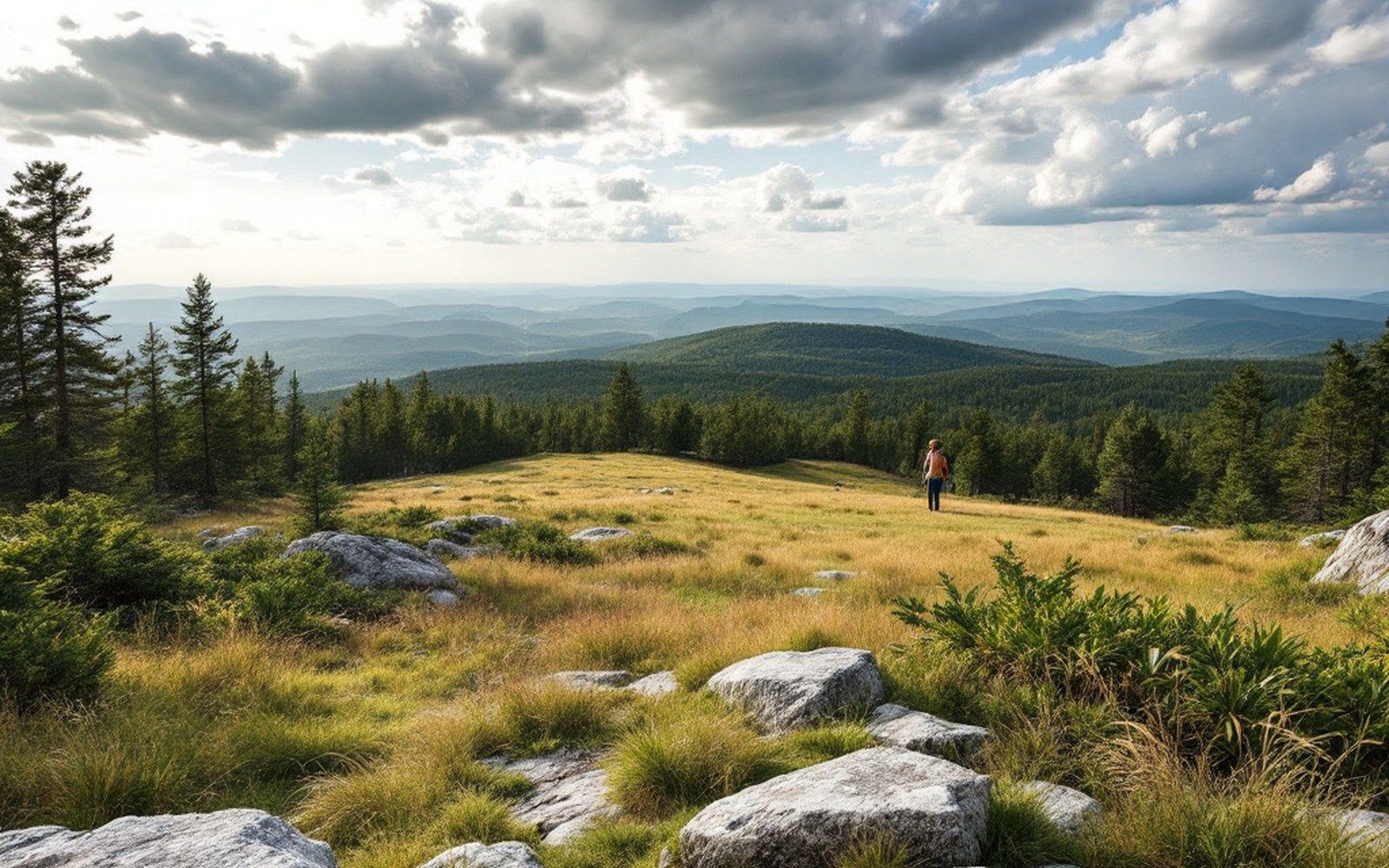
Where the rock changes, so does everything above it
Granite and quartzite starve the soil. They weather into thin, acidic ground that suits heaths and chestnut oaks and not much else — the dominant story across most of the southern Blue Ridge. Then the rock shifts. A band of amphibolite, a dark metamorphic rock rich in calcium, iron and magnesium, runs through the high mountains of western North Carolina, and the soil above it is measurably richer, less acid, more hospitable. The plant list changes with it almost like a boundary on a map.
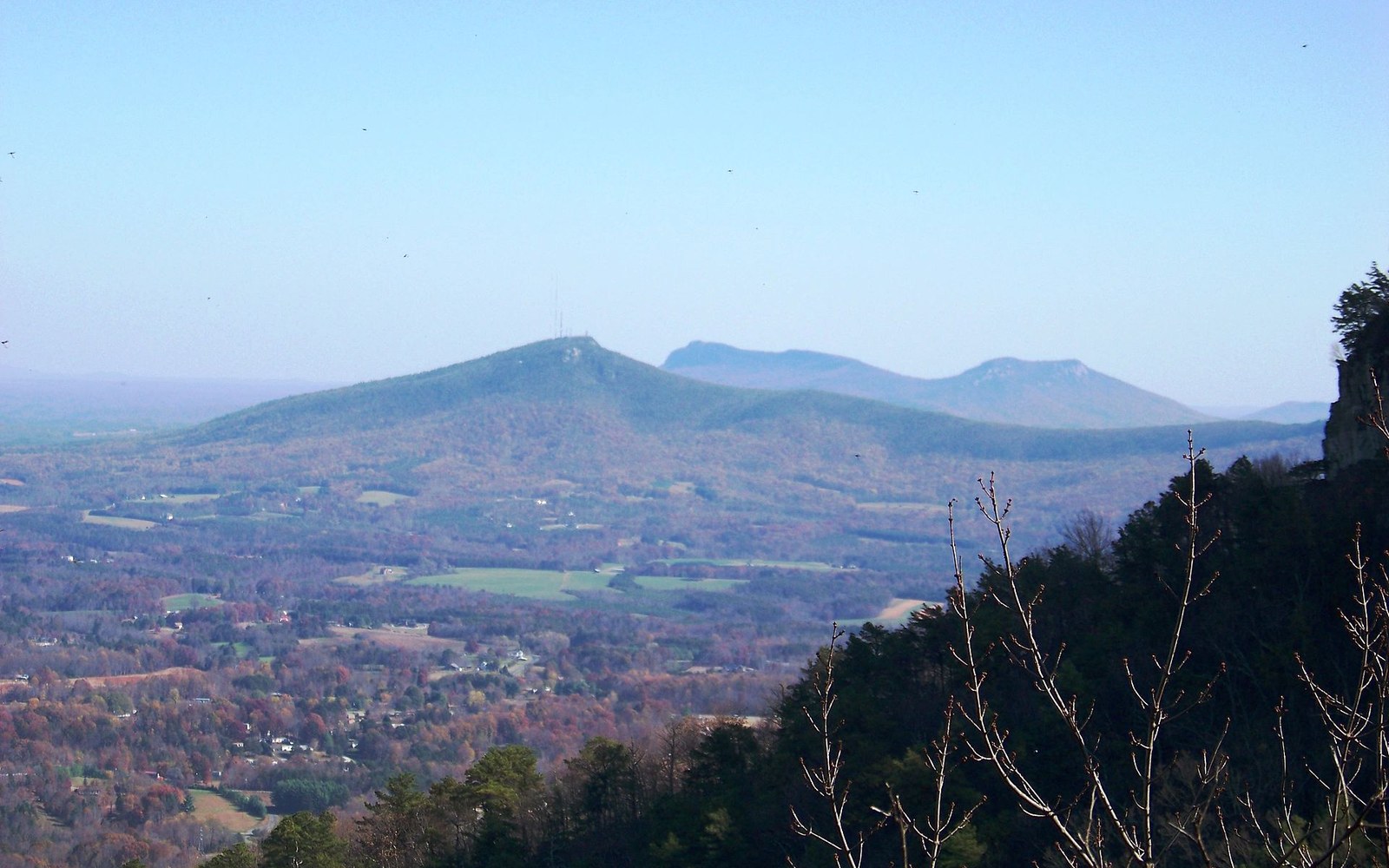
A monadnock is the hard core of a landscape whose softer country eroded away around it. Pilot Mountain and Hanging Rock are quartzite that simply refused to leave.
Read the piecePhoto: Sauratown Mountain from Pilot Mountain (North Carolina) - panoramio · Wikimedia CommonsAmphibolite weathers into calcium-laden material that buffers the acidity other mountain soils can't escape. The result is a suite of uncommon cove and summit communities that botanists have tracked for generations: rich cove forests heavy with basswood, black cohosh and blue cohosh, trilliums in quantity, and herb layers rarely found on the granite-quartzite ridges a ridge or two over. Elk Knob, in Watauga County, sits squarely in this amphibolite zone, and its upper slopes carry Northern hardwood communities more typical of New England than the South.
The effect is not subtle at the summit-bald scale either. Where grassy balds occur on amphibolite, the forb diversity — the broad-leaved, non-grass plants — is considerably higher than on comparable balds underlain by resistant felsic rock. Weakley's Flora of the Southern and Mid-Atlantic States literature documents this soil-chemistry-to-plant-community chain repeatedly: geology is not background, it is the argument.
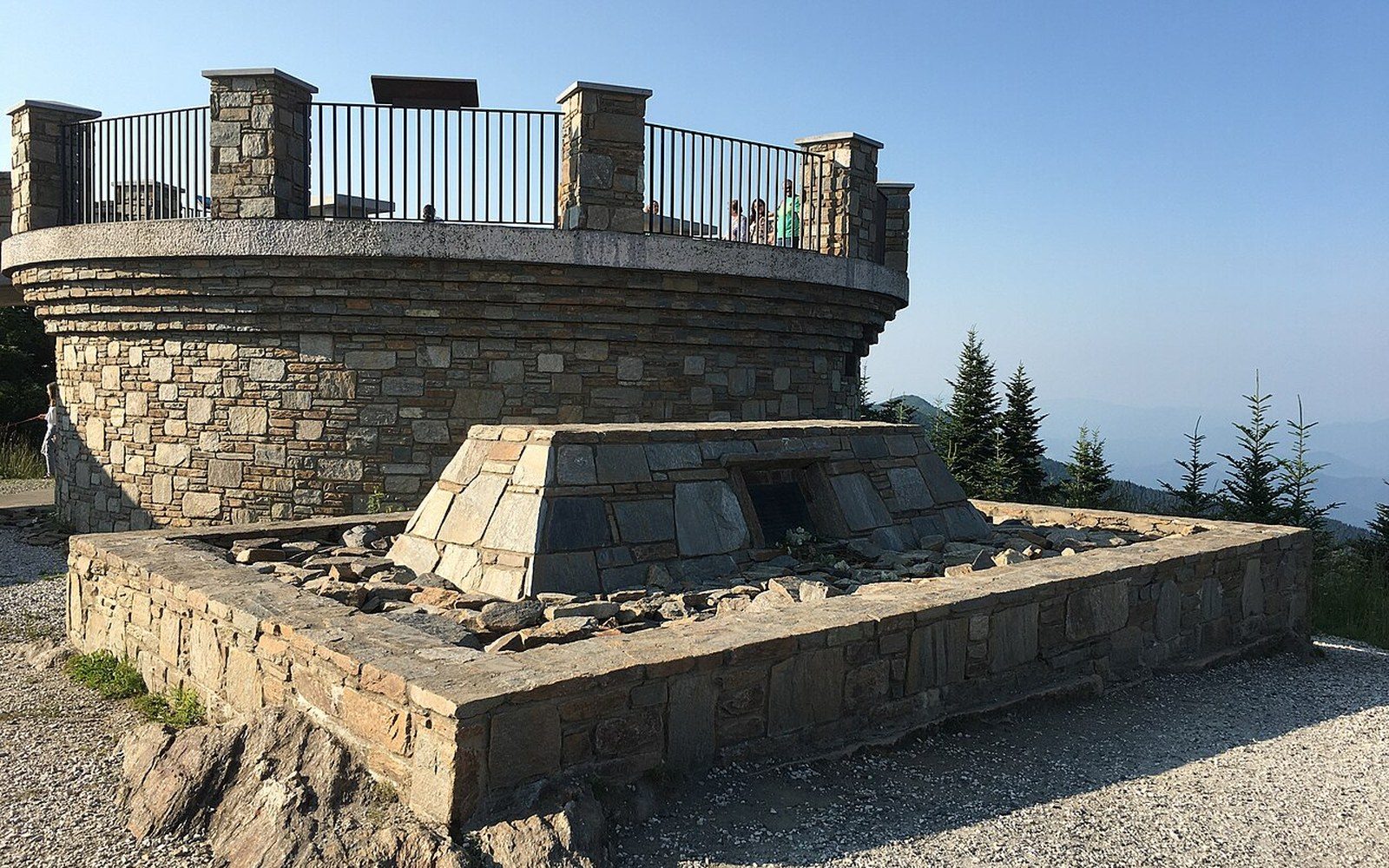
This matters because visitors driving the Blue Ridge Parkway read the landscape visually — a dark, densely forested slope, a grassy opening, a rocky summit — without necessarily seeing what determines it. The color of the rock in a roadcut, that almost black or dark green stone against the paler granite flanks, is the tell. Amphibolite outcrops tend to support lush growth right to their base; the soil holds moisture and nutrients the acidic alternatives shed. The mountains look continuous. Underneath, they are anything but.