Between 1933 and 1942, roughly 100,000 young men moved through North Carolina in olive drab, living in camps with names like F-3 and SCS-4, and they built most of what a hiker in this state now assumes was always there. The Civilian Conservation Corps — Roosevelt's answer to 25 percent unemployment and exhausted land — put its heaviest hand on the Southern Appalachians. What feels ancient is mostly ninety years old.

The CCC enrolled men between seventeen and twenty-eight, most of them from cities, most of them hungry. The federal government paid thirty dollars a month; twenty-five went straight home to the enrollee's family. In return, the corps planted trees, graded slopes, dynamited rock, mixed concrete by hand, and shaped landscape at a scale no private enterprise would have touched. North Carolina hosted more than eighty camps across its operating years. The mountains held the largest concentration, but camps worked the Piedmont and the coastal plain as well.
The work in the Appalachians was organized around a specific problem: the forests were wrecked. Decades of clear-cutting had stripped slopes that shed topsoil into rivers rather than holding it, and the fires that followed logging had burned through what logging left behind. The CCC did not inherit a wild landscape; it inherited a damaged one. Much of what looks like old growth today is second growth that the corps helped to establish — planted on bare slopes by young men with seedling trays and no particular training in forestry, following plans drawn by the Forest Service officers assigned to each camp.
The trails are the most visible legacy, but they were never the primary mission. The corps graded fire roads first — access for suppression crews was the Forest Service's overriding concern in the 1930s, because fire was still running through the cut-over land every dry season. Trails came second, often cut by the same crews as a secondary clearing project along ridgelines already opened for other purposes. Where a trail today feels like a natural route along a crest, it frequently follows a fire break that a CCC crew roughed in with pulaskis and crosscut saws.

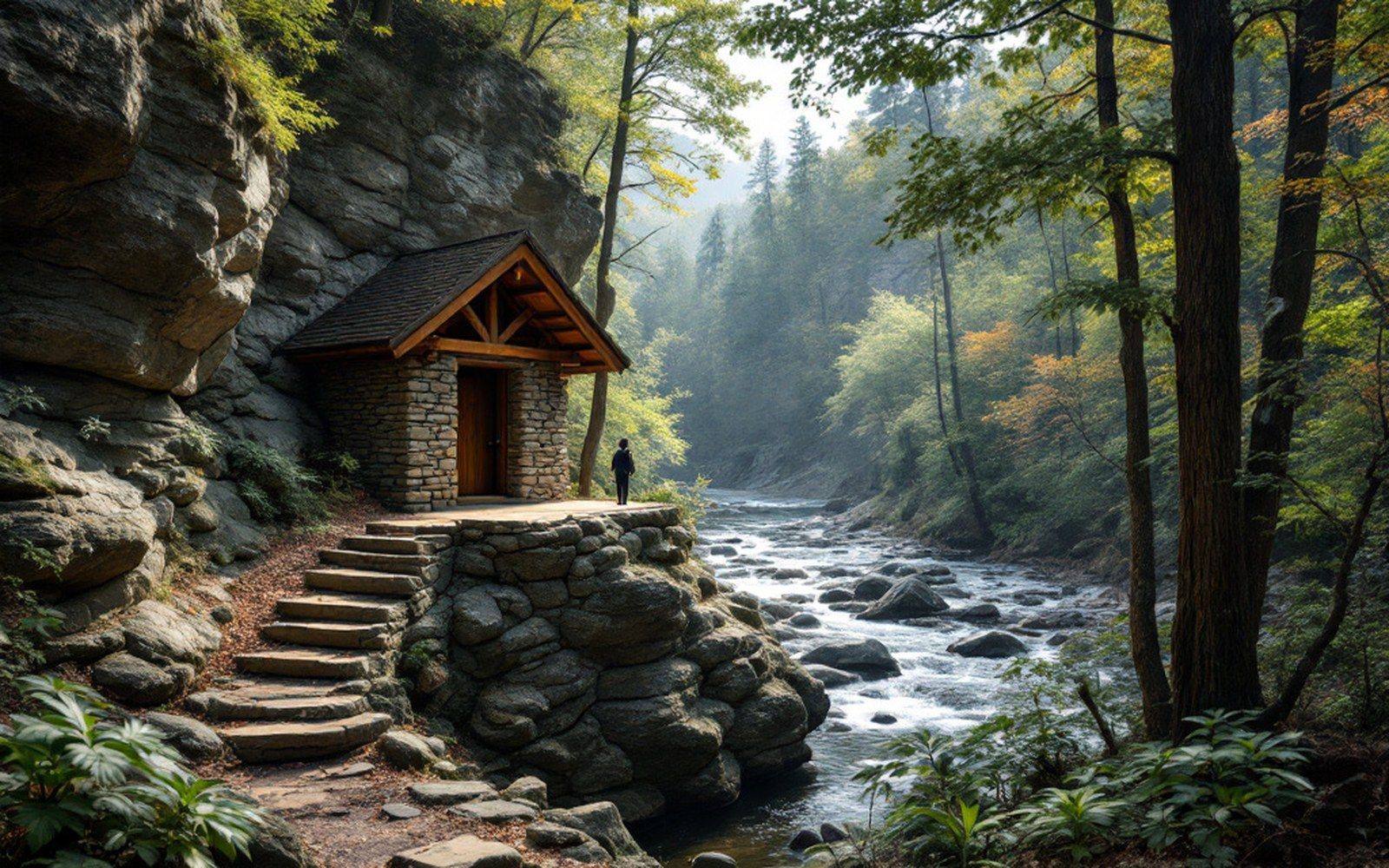
The shelters are a more concentrated legacy. Stone-and-timber lean-tos along what is now the Appalachian Trail through North Carolina were built almost entirely by CCC labor. The Appalachian Trail Conservancy's historical records document the corps as the primary builder of the trail's infrastructure through the Southern Highlands. The shelters were designed for permanence — dry-laid or mortared stone, heavy chestnut timbers before the blight cleared the American chestnut from the canopy, then oak and locust as substitutes. Several structures standing today are original to the 1930s work, repaired but not replaced.
Bridges, culverts, retaining walls and check dams followed the same aesthetic logic: local stone, fitted by hand, sized to last. The Forest Service and the National Park Service both provided architects and engineers to the camps, and their designs carried a recognizable vocabulary — low horizontals, materials drawn from the site, nothing that competed visually with the landscape. The National Park Service's Historic American Buildings Survey holds drawings and photographs of CCC structures from this period, and the consistency across sites is striking. A picnic shelter in the Pisgah, a comfort station at a Piedmont reservoir, a trailhead kiosk in the Black Mountains — the hand is the same.
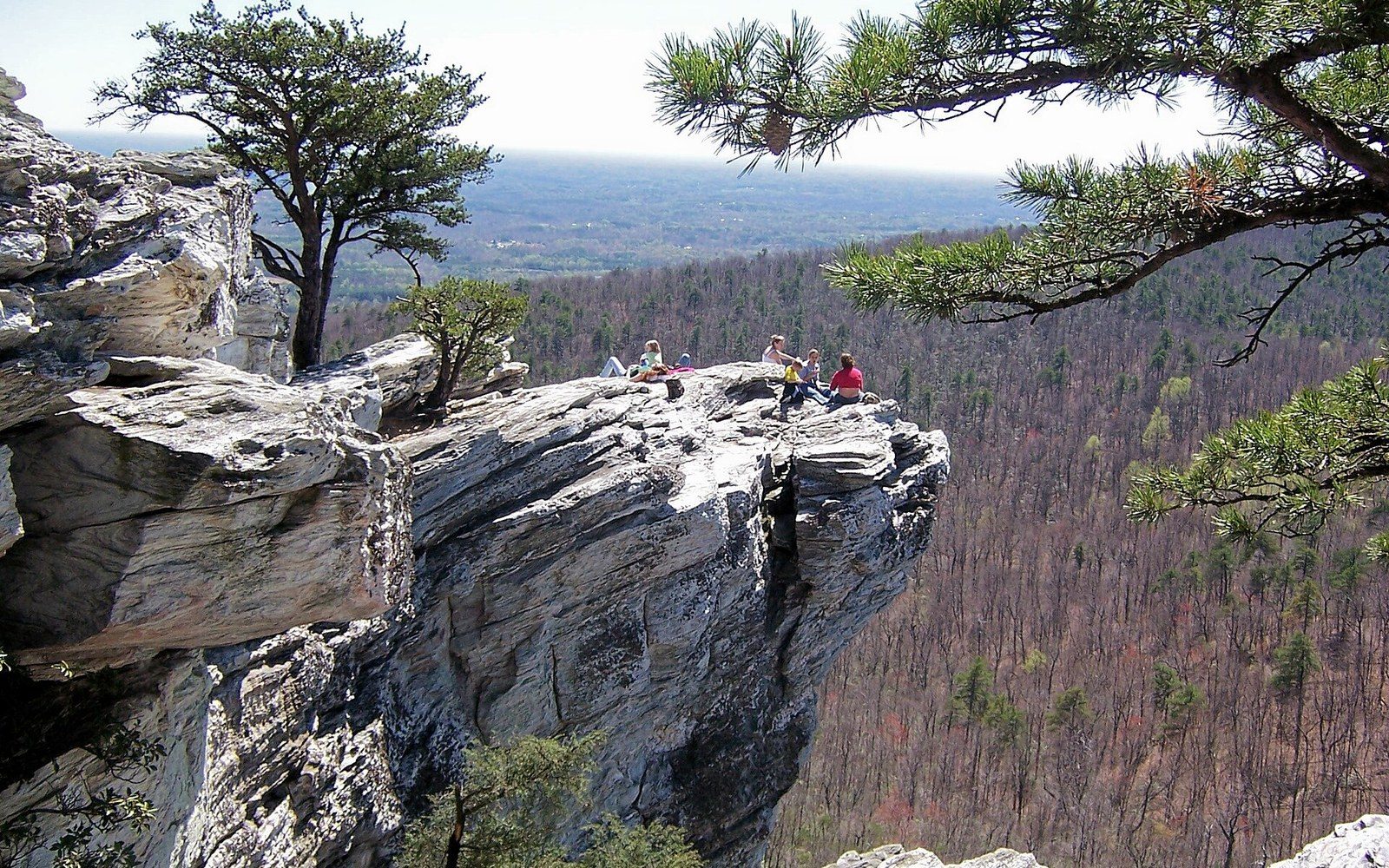
At Mount Mitchell, CCC crews built the road to the summit and the original park infrastructure in the years before North Carolina State Parks formally administered the area under its current mandate. The site was already a state park — the oldest in North Carolina, established in 1915 — but it was the corps that made it accessible beyond the railway that had first carried tourists up. At Hanging Rock in the Sauratown Mountains, crews cut the first trails to the summit and quarried the stone for the original park buildings. At Pilot Mountain, clearing and grading preceded the formal trail system that visitors follow today.
The CCC's official history tends toward triumph, and the landscape partly earns that framing. Billions of trees planted nationally, millions of acres of erosion controlled, a trail network that would have taken generations to build by any other means. But the program had a sharp edge it preferred not to advertise. The corps was racially segregated throughout its existence, by policy, not by drift. African American enrollees — who made up roughly ten percent of the national enrollment — were assigned to separate camps and often directed to different, less visible work. In North Carolina, Black CCC camps operated in the eastern part of the state, some of them working on soil conservation projects and state forests that receive less attention than the mountain parks. The National Park Service's own history of the program acknowledges the segregation as a structural feature of the program, not an aberration.
The men who built the Appalachian trail shelters and the summit road at Mitchell and the stone walls at Linville Gorge's overlooks have no individual names on what they built. The camps had rosters; the Forest Service kept records; but the attribution on the landscape is collective and anonymous. You can stand at a mortared stone wall above the gorge and know, with certainty, that it was built by a CCC crew in the 1930s, and know nothing else about who placed each stone.
That is its own kind of record. The work outlasted the men who did it, outlasted the program that organized them, outlasted most of the political arguments that surrounded both. Ninety years of weather have done what they have done, and the walls mostly stand. The trails that began as fire breaks carry a different kind of traffic now, and the slopes that were bare in 1933 are forested in ways that feel inevitable. They are not. They are the result of specific decisions made under specific pressures, executed by specific young men with axes and shovels, whose names are not on anything.